Lawn careLawn and garden tips
When to spray onehunga weed in the Bay of Plenty
Spray onehunga in winter, before the prickles form. Here's how to spot it, the best timing for Tauranga lawns, and how to stop prickles coming back.
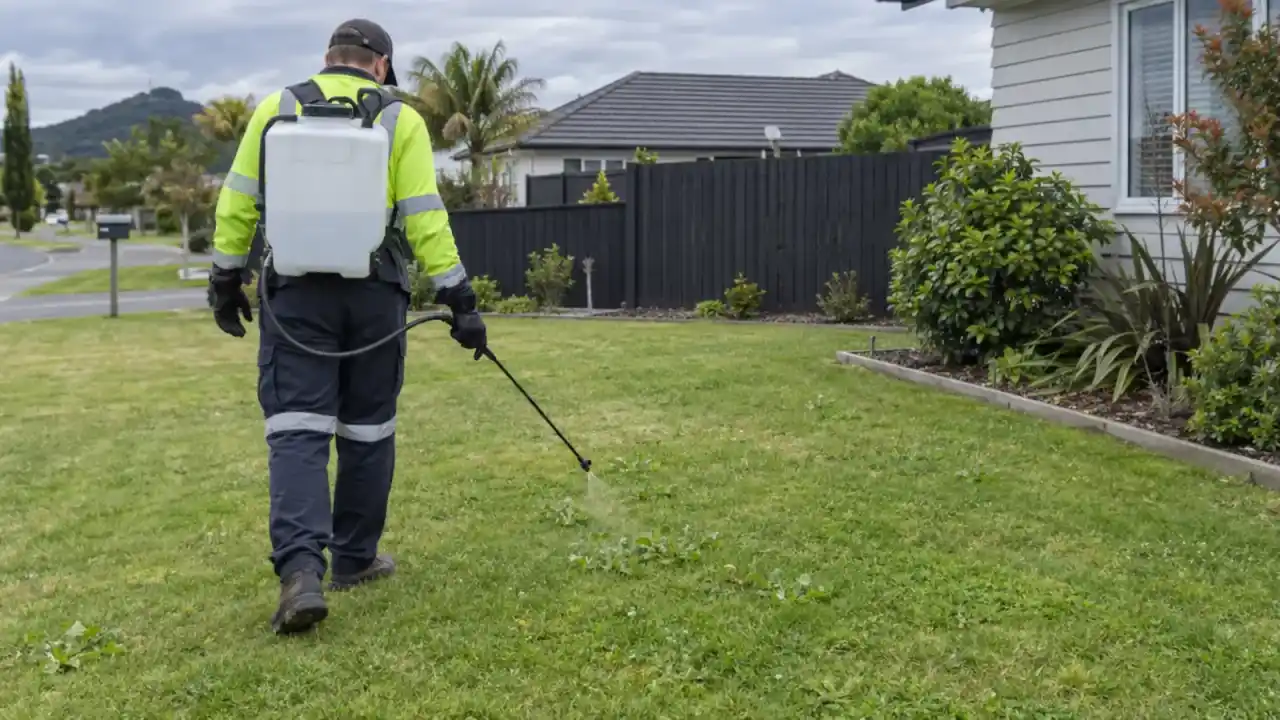
The best time to spray onehunga weed in the Bay of Plenty is winter to very early spring, roughly June to August. That’s when the plant is small and actively growing, but before it forms the seed heads that become prickles. Spray it in October or later and you can still kill the plant, but the prickles it has already made stay in your lawn until summer.
Onehunga is the reason so many Tauranga lawns become painful to walk on barefoot in spring. The good news is that it’s predictable. Once you know its life cycle, the timing makes sense.
What onehunga weed looks like
Onehunga (also called prickle weed, or lawn burweed overseas) is a small, low-growing weed with soft, finely divided, feathery leaves. It grows in flat little rosettes that often sit below the mower blades, so it’s easy to miss until the prickles arrive.
From spring, you’ll find small clusters of spiny seed heads right at ground level, close to the centre of each plant. Those are the prickles. They stick to bare feet, socks, shoes and pets’ paws, which is also how they spread around the section and into the neighbour’s lawn.
It’s easy to confuse with yarrow, which also has feathery leaves. Yarrow is a tougher, longer-lived plant that spreads underground and doesn’t make prickles.
The onehunga life cycle, and why timing matters
Onehunga is a winter annual. Each plant lives for less than a year, and it follows the same pattern every year.
- Autumn: seeds germinate. Seed that has sat in the soil over summer sprouts once the autumn rain arrives, often in gaps left where the lawn thinned out over summer.
- Winter: the plant grows. It spreads quietly through the cooler months while most people aren’t paying attention to the lawn.
- Spring: it flowers and sets seed. From around October the plant forms its spiny seed heads. That’s when you start to feel it.
- Summer: it dies off. As the lawn dries out the plant dies, but the hardened prickles stay behind, and their seeds drop into the soil, ready for next autumn.
That’s why spraying in spring is frustrating. By the time you can feel the prickles, the seed is already made and the job is half lost. Spraying in winter kills the plant before it gets that far.
The best timing for Tauranga lawns
- Main spray: June to August. The plants are up and growing, still small, and haven’t flowered. This one spray does most of the work.
- Optional early spray: late autumn (April to May). On lawns with a heavy onehunga problem, an extra treatment while the soil is still warm knocks out the first wave of seedlings.
- Last chance: early September. If you’ve missed winter, spray as early in spring as you can, before the seed heads form.
- Too late: October onwards. You’ll kill the plant but not the prickles already in the lawn. Use this year to plan for next winter.
Pick a dry, still day for spraying. Most lawn sprays need a few dry hours to soak in, so rain straight afterwards can wash them off before they work.
Why onehunga can be harder to kill around the Mount
Most onehunga responds well to selective lawn sprays, the kind that kill broadleaf weeds but leave the grass alone. However, a strain of onehunga that resists some of the common lawn herbicides has been found north of Auckland and in Mount Maunganui, according to Massey University’s New Zealand weeds database.
In practice, that means using the same product year after year isn’t a good idea, especially on coastal sections. If you’ve sprayed and the onehunga keeps coming back, the product may be the problem rather than the timing. Rotating between products with different active ingredients, and always following the label, gives better long-term control.
How to get rid of prickles in your lawn
If the prickles are already there, you’re dealing with two things: the plants and the seed heads they’ve made.
- Kill the plants now with a selective prickle spray made for lawns. Even in spring it stops them making more seed heads.
- Collect what you can. Mow with the catcher on and empty it into the rubbish, not the compost. Hardened prickles in the clippings will spread around the garden otherwise.
- Wait them out. The prickles that are left soften and break down as the lawn dries out over summer.
- Plan next winter’s spray. This is the step that actually stops them. Good onehunga weed control happens before you can feel anything underfoot.
Keeping prickles from coming back
Spraying deals with this year’s plants. Stopping next year’s crop is about the grass.
- Keep the lawn thick. Onehunga seed germinates in bare and thin patches. A dense lawn leaves it nowhere to start.
- Feed in autumn and spring. Feeding thickens the grass so it closes up the gaps weeds use. On sandy coastal sections in Pāpāmoa and the Mount, nutrients wash through quickly, so a lighter feed more often works better.
- Mow at the right height. Scalping a lawn short opens it up to weeds. Kikuyu in particular crowds out a lot of winter weeds when it’s healthy.
- Stop the seed. Every plant you kill before it flowers is seed that won’t be in the soil next autumn. Two or three winters of good timing usually make a big difference.
DIY or have it done?
Prickle sprays are sold at most garden centres, and on a small lawn a DIY spray in winter can work well. Read the label carefully, use the rate it gives, and keep children and pets off the lawn until it has dried.
If you’d rather have it handled properly, our lawn spraying in Tauranga service times the spray for the Bay of Plenty seasons, uses selective sprays matched to your lawn type, and follows up with feeding so the grass fills the gaps. You’ll find starting prices on our prices page, and a regular lawn mowing round keeps the lawn at the right height in between.
Quick answers
Can I spray onehunga in spring? You can, and it will kill the plant, but any prickles already formed stay in the lawn until they break down. Winter spraying prevents them.
Does weed and feed kill onehunga? It can set it back, but a targeted selective spray in winter, before the prickles form, is far more reliable.
Will spraying onehunga kill my kikuyu? Not if you use a selective lawn spray made for broadleaf weeds and apply it at the label rate. Always check the label suits your grass type.
Will the prickles go away on their own? The plants die off as summer dries the lawn, and the prickles soften and break down. But their seed has already dropped into the soil, so without a winter spray the same thing happens again next spring.